
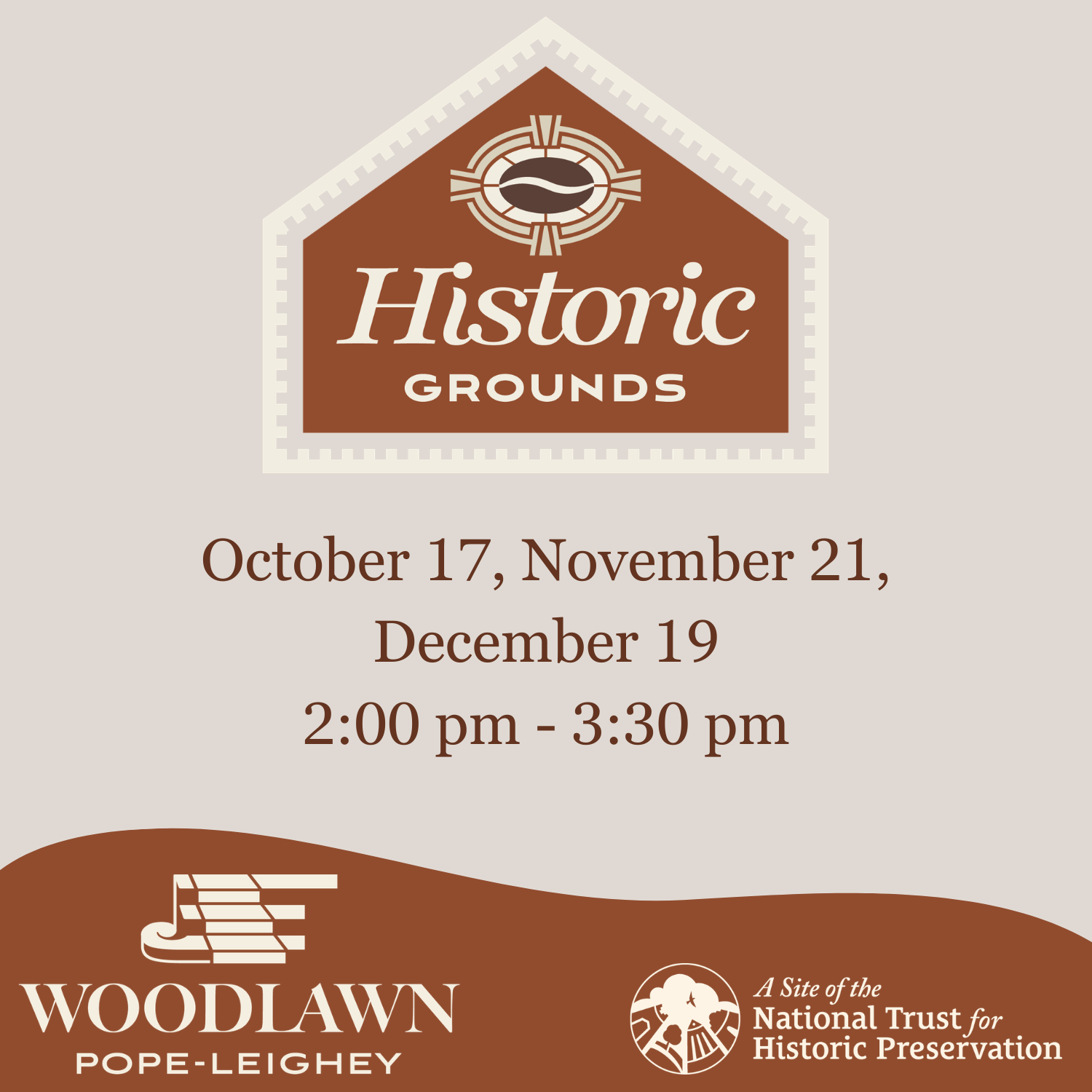
Join us at Woodlawn this spring for our Historic Grounds series, where we bridge the gap between scholarly research and community dialogue. Each session pairs scholarly insight with discussion, offering a unique space to learn, reflect, and connect.
When: Third Saturday of the month, 2:00 pm – 3:30 pm
Tickets: $35 (or book a Fall Pass and save 20%!)
From 19th-century mourning rituals and memorial traditions following the losses experienced by the Lewis family and enslaved communities, to the mid-century personal transitions and losses associated with Frank Lloyd Wright’s Pope-Leighey House, this program examines how loss leaves its mark on both human history and physical spaces. Through archival accounts, physical artifacts, and landscape history, we will reflect on how different generations navigated personal and collective sorrow and how these historical expressions of grief continue to resonate today.
Itinerary:
2:00 pm: Join a subject matter expert for an in-depth exploration of local history and its national relevance. Engage in spirited conversation with the speaker over coffee and light refreshments.
3:00 pm: An exclusive experience tied to the day’s topic - such as a specialized tour or vault access to rarely seen collection objects.
Your Ticket Includes:
Lecture & Q&A: Admission to the keynote presentation and interactive Q&A session
Vault Access: A viewing of rarely seen artifacts from the Woodlawn & Pope-Leighey House Collection.
Historic Tours: Access to the Woodlawn estate for open house tours.
Refreshments: Complimentary coffee and light bites.
About the speaker:
Elizabeth M. Reese is a historian whose research is focused on public memory, family ties, and grief. As the Senior Manager of Public Programs & Interpretation, Elizabeth oversees historic research, tours, and programming at Woodlawn & Pope-Leighey House. Elizabeth holds an M.A. in American History from Gettysburg College. She is currently working on a manuscript exploring how Edwin Booth's grief transformed American theatre and contributed to national healing post-Lincoln assassination.